A Journey of Oddities: A Tale from the Thailand-Laos Border
Thailand–Laos border · A travel memoir
A Journey of Oddities: A Cow, a Temple, and a Very Strange Day
A quiet temple. A grazing cow. A meal that turned against me, money that went missing, and a police encounter I still cannot quite explain. Some travel days refuse to follow the itinerary.
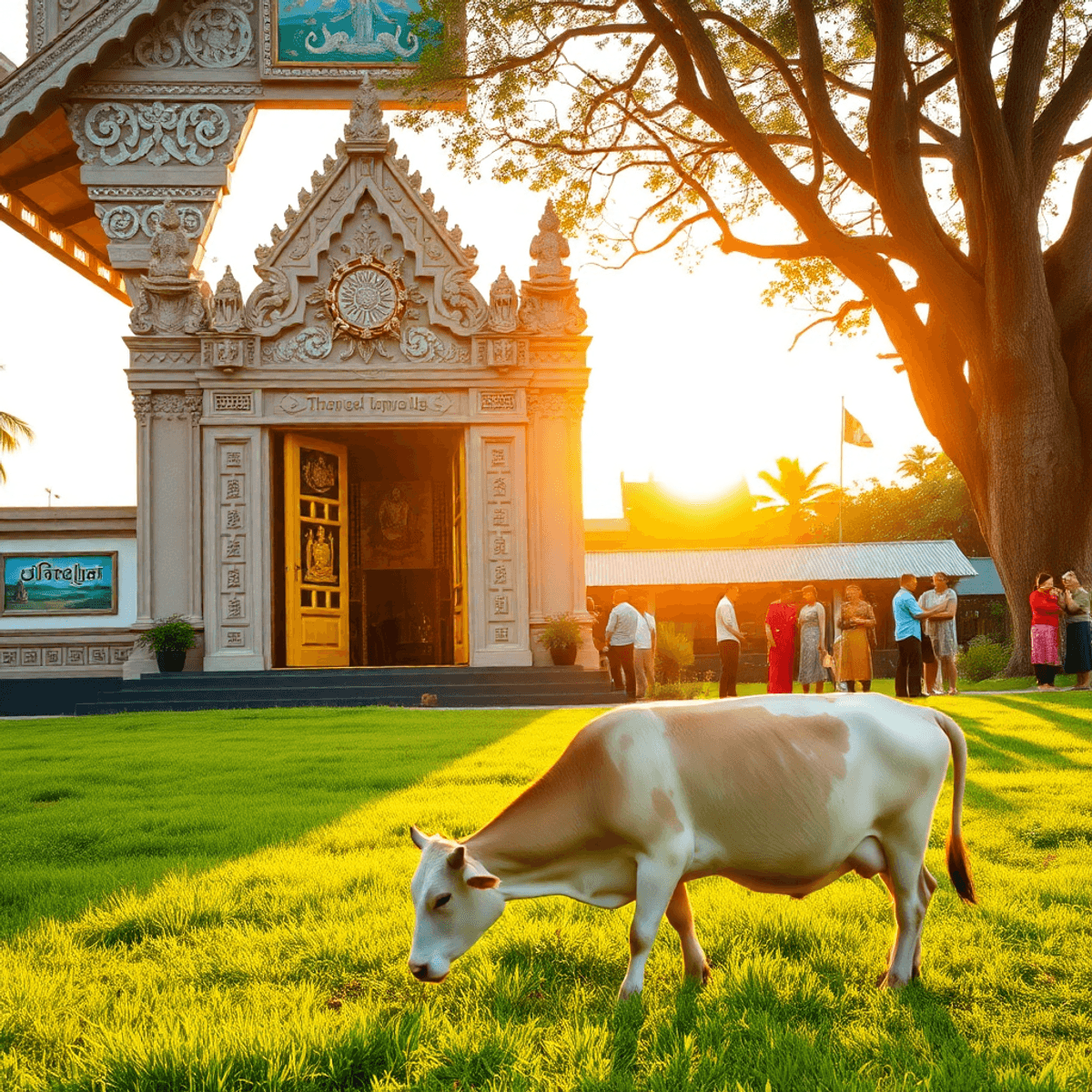
The day began with incense and ended with me laughing at something that was not especially funny. Between those two moments came a cow beside a temple, a lunch I wished I had left unfinished, a missing roll of cash, and a man in a police uniform shouting “happy ending” at the evening street.
It is tempting to arrange such a day into a neat moral. Travel rarely cooperates. Looking back, I can see separate things more clearly: a peaceful place, an animal doing nothing mysterious, an illness I could not diagnose myself, a loss I needed to respond to, and an awkward interaction that became funnier in memory than it felt at the time.
The Day at a Glance
I have not named the temple, restaurant, town, or people involved. The border region is the setting, not an accusation against a community. This is one traveller’s recollection, with identifying details deliberately limited.
- Late afternoonA temple visit. Carvings, flowers, quiet conversation—and a cow grazing near the entrance.
- Early eveningA local meal. Noodles, grilled meat, lime, chilli—and nausea that changed the evening’s plans.
- After dinnerMissing cash. A frantic search through pockets and bags, made worse by feeling unwell.
- NightfallAn odd encounter. A man who appeared to be a police officer arrived, unsteady on his feet and repeating an unexpected phrase.
A note on memory: this account preserves the sequence and spirit of the original draft. It does not claim to identify the cause of the illness, determine how the money disappeared, or verify the uniformed man’s identity.
The Temple and the Cow
The sun was already low when I reached the temple. Warm light caught the edges of the carvings and softened the colours on the murals. Near the entrance, older women sat on woven mats making flower garlands. Children moved between the adults. Incense drifted through air that also smelled of leaves, dust, and food from outside the grounds.
I slowed down. Not because anyone told me to, but because the place made hurry feel rude.
Then I noticed the cow. It was grazing beside the entrance with complete indifference to my attempt at a reflective moment. No drama. No meaningful glance. Just grass, jaw movement, and the occasional flick of an ear.
The scene stayed with me because of its contrast: an ornate gateway built to hold centuries of attention, and beside it an animal concerned only with the next mouthful.
At the time, I tried to turn the encounter into a sign. Perhaps the cow meant prosperity. Perhaps change. Perhaps a warning. I now prefer a simpler interpretation: it was a cow in a place where cattle and people could cross paths. Any additional meaning belonged to me, not to some universal rule about Thai temples.
My longer guide to what cows symbolise in different cultures explores documented traditions separately from this blog’s personal road metaphor. For a more practical encounter, there is also my guide to cows, cars, and livestock hazards on the road.
The cow did not predict my day. It simply gave me a quiet image against which the rest of the day would look even stranger.
A Bite of Misfortune
After leaving the temple, I followed the smell of grilling and chilli into a small eatery. The chalkboard menu offered more dishes than I could reasonably try. I ordered noodle soup and grilled meat skewers, then added papaya salad because restraint seemed unnecessary on holiday.
The first few minutes were everything I wanted from a border-town meal: heat, sourness, smoke, herbs, and a table close enough to the street to watch the evening arrive. I remember lime and chilli most clearly. Memory becomes less generous after that.
A heaviness settled in my stomach. Then came nausea and the anxious sense that my body had changed its mind about the evening. I stopped eating. Under the table, my thoughts jumped immediately to food poisoning, although symptoms alone could not tell me what had happened. It might have been something I ate. It might not. A story does not become a diagnosis just because it needs a cause.
The sensible response was unglamorous: stop, find somewhere safe to sit, drink safe fluids, and get help if symptoms became severe. The CDC’s Yellow Book guidance on travellers’ diarrhoea emphasises replacing lost fluids and electrolytes. Its travel guidance on diarrhoeal illness lists severe warning signs including bloody or persistent diarrhoea, high fever, frequent vomiting that prevents keeping liquids down, and signs of dehydration.
When illness stops being a travel anecdote: severe, worsening, or persistent symptoms need qualified medical attention. Do not let a blog story, a restaurant review, or embarrassment keep you from seeking care.
My related account of food-poisoning symptoms, timing, and fever is a better place for practical follow-up than this memoir. And if you enjoy food writing without the gastrointestinal suspense, Migrationology is a natural next stop for its long-running focus on food and travel.
The Missing Money
When the bill arrived, I reached for my cash and found nothing where I expected it. I checked the same pocket again, as though repetition might improve the result. Then the other pocket. Then the bag. Then every compartment, including the one I already knew contained only a pen and a crumpled receipt.
Feeling ill made the search harder. The restaurant seemed louder, the street brighter, and every small delay more embarrassing. I could not honestly say whether the money had fallen out, been misplaced, or been taken. “My cash is gone” was the only fact I had.
That distinction matters. Panic writes a complete story before evidence arrives. A calmer checklist is more useful:
- Move somewhere safe and retrace your immediate steps without putting yourself at further risk.
- Ask the venue whether anything has been handed in; check bags, pockets, and recent payments methodically.
- If cards or account access may be compromised, contact the provider through an independently verified channel.
- Keep a record of what is missing, when you last saw it, and what actions you take.
- If a crime may have occurred, seek assistance from an appropriate local authority or trusted accommodation provider.
It also helps to prepare before anything goes missing. My guides to privacy when paying in unfamiliar places, handling an unexpected Thailand SIM-card problem, and hotel booking, CCTV, and personal safety cover different parts of that preparation.
For readers who like practical planning alongside personal stories, Nomadic Matt focuses on travelling more affordably, while Expert Vagabond combines travel advice with photography and outdoor experiences.
The Strange Uniformed Encounter
Outside, a man in what looked like a police uniform came into view. He was unsteady on his feet. His shirt hung loosely, his gestures were too large for the narrow street, and he repeatedly shouted “happy ending” with the confidence of someone announcing a bus departure.
I did not know what he meant. I did not know whether he was genuinely an officer, and I was in no condition to conduct an interview. I tried gestures and a few broken phrases. He waved his arms. Somewhere between confusion, nausea, and embarrassment, I laughed.
The moment became comic in retelling, but I do not want to turn it into a claim about Thai police or local humour. It was one encounter with one unidentified person on one strange night. Nothing broader follows from that.
There is also a practical distinction between laughing later and depending on uncertainty in the moment. If you need urgent help, move toward a staffed business, your accommodation, other travellers, or a verified local emergency contact rather than relying on someone whose identity or behaviour is unclear.
My posts on an interview involving a drunk cop and a data analyst, what a police refusal to investigate can mean, and inaction, false assumptions, and the need to verify approach official encounters from other angles.
If you enjoy misadventure told with self-awareness, Never Ending Footsteps is known for candid accounts of travel plans going wrong. TravelFreak offers a more cinematic route into adventurous storytelling.
What the Day Taught Me
Back at the guesthouse, jasmine and fried food hung in the warm air. Other people were still laughing, eating, and having the pleasant evening I had imagined for myself. My own day looked different in every direction: peaceful at the temple, uncomfortable at dinner, alarming at the cash search, absurd on the street.
Flexibility is useful; denial is not
Changing plans can be part of travel. Pretending you are fine when you are ill, lost, or vulnerable is something else. Adaptability works best when it starts with an honest look at the situation.
Humour can soften a memory without rewriting it
I can laugh at the phrase shouted into the street and still recognise that the encounter was confusing. A funny retelling does not need to invent certainty about who someone was or what they intended.
Curiosity should not become a stereotype
One meal does not define a cuisine. One cow does not reveal a national belief. One person in uniform does not explain a police force. The less I turn isolated events into cultural verdicts, the more accurately I can remember them.
A pause is not a prophecy
The cow remains my favourite image because it made me stop. The stop became meaningful only later, when I used it as a reminder to reassess situations before panic or urgency carried me forward. That is the metaphor running through this blog: not “an animal predicted a scam,” but “an interruption gave me time to think.”
For general scam awareness, the US Federal Trade Commission recommends checking travel offers carefully, resisting pressure to decide immediately, and being wary when someone insists on a hard-to-reverse payment method. Its guide to avoiding travel scams explains those warning signs in detail.
33 USA Travel Blogs to Explore
This list mixes USA-based and American-founded blogs. Some writers now live abroad, so “USA” describes their origin or publishing base rather than everyone’s current address. These are independent reading suggestions, not endorsements, sponsorships, or claims that each blogger shares this story’s views.
Southeast Asia, food, and independent travel
Solo and women’s travel perspectives
Storytelling, culture, and responsible travel
Adventure, photography, and travel at different life stages
Flights, rewards, and travel logistics
Frequently Asked Questions
Is the cow in this story meant to be a bad omen?
No. The cow is a memorable part of the scene and a personal metaphor for pausing. The story does not claim that it predicted illness, missing money, or any later event.
Which temple and border town does the story describe?
The post intentionally does not identify them. It is a personal narrative, not a verified location guide or an allegation against a named business or person.
Does the story prove that the meal caused food poisoning?
No. Nausea after a meal can have different causes, and timing alone does not establish one. Severe, persistent, or worsening symptoms should be assessed by a qualified healthcare professional.
What should you do first if travel cash goes missing?
Move somewhere safe, check your belongings and recent steps methodically, and ask the venue whether anything was found. If cards or accounts may be compromised, contact providers through independently verified details.
Does the uniformed encounter represent Thai police generally?
No. It describes one unidentified person and one confusing encounter. It should not be used to judge police, residents, humour, or behaviour across Thailand or the border region.
Are all 33 bloggers currently based in the United States?
No. The list combines USA-based and American-founded blogs. Several writers live or spend long periods abroad. Their inclusion reflects their background and publishing connection, not a claim about their current address.
Safety Sources and Editorial Note
- CDC Yellow Book: Travellers’ Diarrhea — fluid replacement, treatment context, and clinical guidance.
- CDC: Preventing Shigella Infection While Traveling — severe symptoms and reasons to seek medical care.
- US Federal Trade Commission: Avoid Scams When You Travel — travel-offer research, pressure tactics, and payment warnings.

Comments
Post a Comment